EXECUTIVE PORTFOLIO | TALENT STRATEGY & ORGANIZATIONAL DEVELOPMENT
Designed for immediate operational application, this toolkit provides leaders with practical, structured frameworks to drive everyday accountability, manage performance conversations, and coach team members toward measurable behavioral growth.
Executive Leadership Toolkit
Practical Frameworks for Immediate Leadership Application
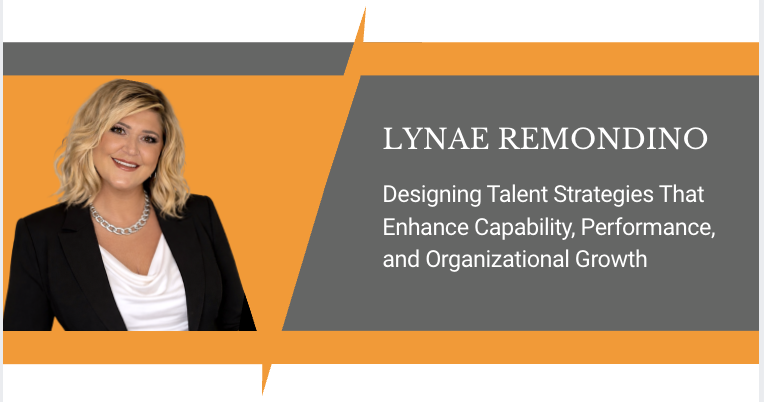
Designed by Lynae Remondino
Section 1: The Coach Approach
Step 1: SHARE THE KNOWLEDGE and SET EXPECTATIONS
- What we do and why we do it.
- Gain buy-in and commitments to expectations.
- Ask questions to confirm alignment.
- Support by answering questions.
Step 2: DEMONSTRATE THE WAY
- Team member shadows you — show how we do it.
- Ask team member(s) to verbalize the task / interactions they witnessed and the importance of the task or takeaway
Step 3: OBSERVE the team member — trust but verify
- Shadow team member(s).
- Observe them consistently and frequently.
Step 4: COACH / PROVIDE FEEDBACK in the moment
- Engage team member(s) through targeted inquiry to self-assess their execution, refining technique and ownership in real time.
Step 5: FOLLOW UP AND FOLLOW THROUGH
- Observe / shadow frequently.
- Determine team members fully understanding their key performance indicators (KPIs).
- Create accountability.
Adaptive Coaching Loop: This framework is dynamic, not strictly linear. Steps 1 through 5.can, and should, be repeated or revisited at any point in the process whenever gaps are identified, ensuring full mastery and alignment before advancing to new operational skills.
SECTION 2: HOW TO PROVIDE FEEDBACK – SBI Model
Built upon the foundational Situation-Behavior-Impact model (originally developed by CCL), this adaptation redesigns the constructive feedback mechanism to drive accountability.
WHEN GIVING PRAISE (reinforcing good behaviors):
- Situation: Explain the situation you observed.
- Behavior: Describe the behavior you observed.
- Impact: Share the impact or the result of the behavior.
WHEN SUPPORTING A CHANGE IN BEHAVIOR (Constructive – Lynae’s Adaptation):
- Situation: Explain the situation you observed.
- Behavior: Describe the behavior you observed.
- Impact (Inquiry-Driven): Ask the team member to share what they think the impact or result of the behavior was or could be.
- Action/Exploration: Have them explore alternate behaviors that might end in a better result.
SECTION 3: Reinforce performance diagnostic
When performance is not where we would like it, consider which of these core operational support levers to evaluate:
- Level-setting clear expectations and key performance indicators
- Shadowing, observation, and in-the-moment coaching cadences
- Resource availability, tools, and technical support
- Workload balance and task distribution efficiency
- Operational process clarity and workflow optimization
- Recognition, praise, and performance reinforcement
Maximizing Human Capital
Driving enterprise performance requires a unified human capital strategy. This framework spans the full talent lifecycle, aligning workforce strategy with business priorities to build resilient leadership
pipelines and scalable organizational capability.
Leadership & Talent Strategy
Designing scalable talent strategies that align workforce planning with business growth. Empowering leaders through strategic coaching to drive operational excellence, team alignment, and strong accountability.
Facilitation History & Courses
Delivering over 30 distinct instructor-led courses with a dynamic, people-first approach. Proven history of driving active engagement and sustainable behavioral change across diverse industries.
Curriculum Mapping & Design
Uniting instructional design with operational execution. Building technical curriculum maps, hybrid learning architecture, and structured pathways to solve complex organizational challenges.
Talent Management Solutions
Workforce Planning
Aligning business objectives with workforce needs to ensure the right capabilities, capacity, and talent are in place to support organizational growth.
Succession Planning
Identifying and preparing high-potential talent for critical roles to ensure leadership continuity, reduce risk, and strengthen organizational readiness.
Leadership Development
Building leadership capability through targeted development experiences, coaching frameworks, and practical tools that strengthen decision-making, accountability, and team performance.
Performance Management
Designing coaching, feedback, accountability, and performance improvement approaches that support individual growth, talent development, and measurable business results.
Career Pathing
Creating transparent growth frameworks that help employees navigate development opportunities, build critical skills, and prepare for future roles.
Learning & Capability Development
Cultivating organizational capability through strategic learning initiatives, blended learning solutions, onboarding strategies, and targeted development experiences that build individual, team, and organizational effectiveness.
Talent Acquisition
Designing strategic hiring approaches that identify, attract, and select talent aligned to role requirements, team needs, and organizational objectives.
Growth, Engagement & Retention Programs
Implementing strategies that increase engagement, foster employee empowerment, support career growth, strengthen accountability, and improve retention of top talent.
Organizational Effectiveness
Improving systems, processes, team alignment, and operational workflows to increase efficiency, support business priorities, and drive measurable business outcomes.
LET’S CONNECT
Lynae Remondino
North Miami Beach, FL 33160
Lynae.Remondino@gmail.com
PHONE
+1 (720) 635-2000